

How Smart Small Businesses Bridge Generational Gaps in Digital Marketing

How do you create a digital marketing strategy that speaks to both TikTok-loving Gen Z and email-focused Baby Boomers? Generational divides are nothing new, but rapid changes in technology have made them even more noticeable. Each generation uses technology differently, creating challenges for businesses trying to craft messages that appeal to everyone—without doubling or tripling their work.
Today, understanding these generational differences is no longer optional. It’s essential for expanding your audience, building trust, and fostering loyalty across age groups. This guide will show you how to overcome these challenges. We’ll cover some practical strategies to unify your marketing efforts, connect with customers of all ages, and turn these generational gaps into opportunities for growth.
What is Generational Marketing?
Generational marketing is about adapting your strategies to meet the specific needs and preferences of different age groups. It’s not about creating strict silos (like one strategy for Millennials, another for Baby Boomers, and yet another for Gen Z). Instead, it’s about understanding how generational behaviors influence engagement and weaving that knowledge into your overall approach.
Each generation is shaped by shared cultural, political, and technological experiences, which influence how they interact with content. Here’s a quick breakdown:
- Gen Z (Born 1995–2012): Visual-first and highly active on TikTok, Snapchat, and Instagram Reels. They value authenticity, short-form video content, and brands that align with social justice movements.
- Millennials (Born 1980–1994): Passionate about nostalgia and comfortable across multiple channels. They’re active on Instagram, YouTube, and even TikTok, but they also respond well to email campaigns.
- Gen X ( Born 1965–1979): Gen X bridges the gap between analog and digital. They're devoted Facebook users and they trust traditional forms of content like blogs and credible news sources.
- Baby Boomers (Born 1946–1964): Loyal and consistent, they prefer Facebook and email. They respond well to in-depth, trustworthy content from brands they already know.
The main challenge is finding ways to connect with such diverse audiences. A one-size-fits-all approach won’t work, but when executed thoughtfully, generational marketing can take your strategy to the next level.
The Biggest Challenges of Generational Marketing
1. Diverse Digital Habits and Platforms
Each generation has their own preferred platforms and usage behaviors. Baby Boomers are comfortable with Facebook and email, but good luck reaching Gen Z there. They default to TikTok, Instagram, and perhaps LinkedIn for career purposes.
Solution:
Segment your marketing strategy by platform demographics rather than overhauling brand consistency. Provide platform-specific content:
- TikTok for Gen Z (short videos, challenges)
- Facebook for Boomers (informative posts, polls)
- Instagram for millennials (a mix of reels and product highlights)
2. Language and Communication Styles
When writing to Gen Z, you might pepper in emojis, but it would alienate Baby Boomers. Millennials, meanwhile, enjoy playful, meme-influenced humor.
Solution:
Voice segmentation. Adapt tone, formality, and visuals while preserving core messaging. For example:
- Use casual, conversational tones for younger generations.
- Lean into professionalism and substance for Baby Boomers and Gen X.
3. Avoiding Stereotypes
Generational marketing doesn’t mean leaning on clichés. Millennials aren’t all drowning in student debt, and Boomers aren’t all allergic to technology.
Solution:
Base your campaigns on real data rather than assumptions. Use analytics tools to understand behaviors and interests, and craft campaigns around actual engagement trends.
4. Value Alignment
Gen Z wants authentic, value-driven content (climate action, diversity). Boomers prioritize product quality and reliability, while Millennials fall somewhere in between, responding to relatable branding and storytelling.
Solution:
Use a data-driven approach to segment messaging by values:
- Launch sustainability initiatives to resonate with younger generations.
- Share product-backed data and testimonials for older audiences.
5. Balancing Personalization with Scalability
Personalized experiences are key, but they’re often tricky to scale efficiently.
Solution:
AI-powered tools can help automate personalized messaging while maintaining scalability. Ad set A/B testing also allows real-world fine-tuning.
Find Your Target Audience
Before trying to connect with every generation, determine if your business even needs to. Re-evaluating your target market will help you avoid wasting efforts. If your audience primarily consists of Gen X and Baby Boomers, for instance, funneling resources into engaging younger Gen Z users might not make sense.
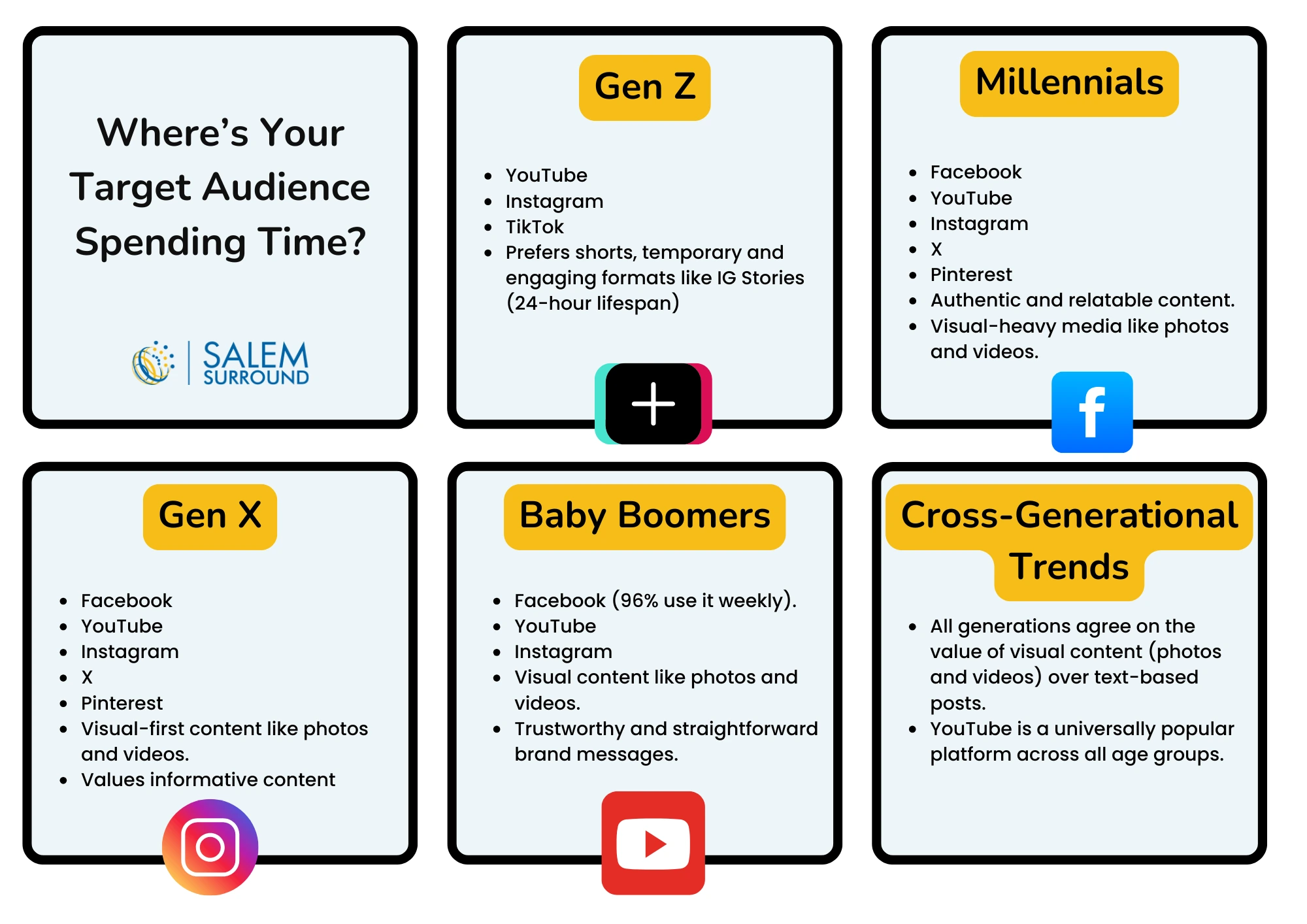
If you decide your business must connect with multiple generations, the next step is identifying where your audience spends their time online. Understanding these habits is so important to meeting your customers where they already are. For example:
- Baby Boomers and Gen X are most active on Facebook.
- Millennials and Gen X are common X users.
- Millennials and Gen Z dominate Instagram, with the latter also driving trends on TikTok.
- Across generations, YouTube is a consistent old favorite, though Gen Z skews more toward other visually-focused platforms like TikTok.
How to Build Cross-Generational Connections
Creating digital marketing campaigns that resonate across generations may seem challenging, but with the right strategy, it’s entirely possible. Here’s how to connect with diverse audiences by understanding their unique behaviors, preferences, and values.
Step 1. Build Generational Personas
Understanding each generation’s traits is essential for crafting effective campaigns. While those within a generation aren’t all the same, shared behaviors and values can guide your strategy. Start by asking these key questions:
- Who are you trying to reach?
- What platforms do they use most?
- What motivates them to act? (Is it price, nostalgia, impactful messaging, or company values?)
Further refine these insights by incorporating your company’s values into your personas. For instance, younger generations tend to prioritize ethical brands, while older generations favor reliability and quality. Tools like Google Analytics can help you identify these behaviors to create well-rounded generational personas that resonate emotionally and practically.
Step 2. Create Shareable, Cross-Generational Content
Appealing to multiple generations means crafting content that transcends age-specific preferences. Nostalgia is especially effective here—it’s a shared thread that connects people across generational lines. A family tradition or a childhood reference can evoke deep emotions.
Creating opportunities for user-generated promotion adds another layer of connection. Encourage your customers to share your content by hosting social media contests or providing rewards for engagement. Organic opportunities, like shareable videos with relatable storylines, can also help spread your message across generational divides. Video marketing, in particular, works well across all social media platforms and appeals to audiences of all ages, allowing your customers to become powerful advocates for your brand.
Step 3. Be Agile with Trends
Cultural trends unfold at different speeds across generations. Gen Z is usually the trendsetter, Millennials amplify and spread trends, while Gen X and Baby Boomers join in later. By catching trends early (especially those that align with your values) you can position your brand as timely and forward-thinking.
For example, if a viral trend supports your company’s sustainability or inclusivity initiatives, weaving that message into your campaign can resonate broadly. Ensure your values shine through any trend-driven content, creating a consistent brand identity regardless of the platform or audience.
Step 4. Measure the Right Metrics
Evaluating success requires looking at engagement differently for each generation:
- Gen Z values interaction and dialogue, such as comments or direct messages.
- Millennials engage socially through likes, shares, and viral behaviors.
- Gen X and Boomers often respond better to content that drives conversion, like email click-through rates or purchases.
While you’re tracking metrics, also measure how well your campaigns communicate your company’s core values. Are consumers engaging with your efforts to create good in the world, like philanthropic projects? Are they responding to stories that emphasize trustworthiness? These insights will help you refine your outreach and connect authentically, regardless of the audience.
Your Action Plan
Generational marketing isn’t about dividing your audience—it’s about uniting them through thoughtful, segmented strategies. Whether you’re leveraging AI for personalized content, addressing value-driven behaviors, or fine-tuning platform-specific messaging, understanding these differences will elevate your campaigns.
Implement these insights into your next campaign and start driving results across generations today.
Ready to bridge the gap across generations and create digital marketing campaigns that truly resonate? Partner with Salem Surround! Our team of experts specializes in crafting data-driven, impactful strategies tailored to connect with audiences of all ages. From building generational personas to designing engaging, shareable content, we'll help you amplify your message and drive results. Contact Salem Surround today and see how we can elevate your marketing efforts!
Blog/Podcasts